Drew Vogel · 15 September 2026
Consolidating Multiple Online Properties: Tracking Shifts in Discovery Rates
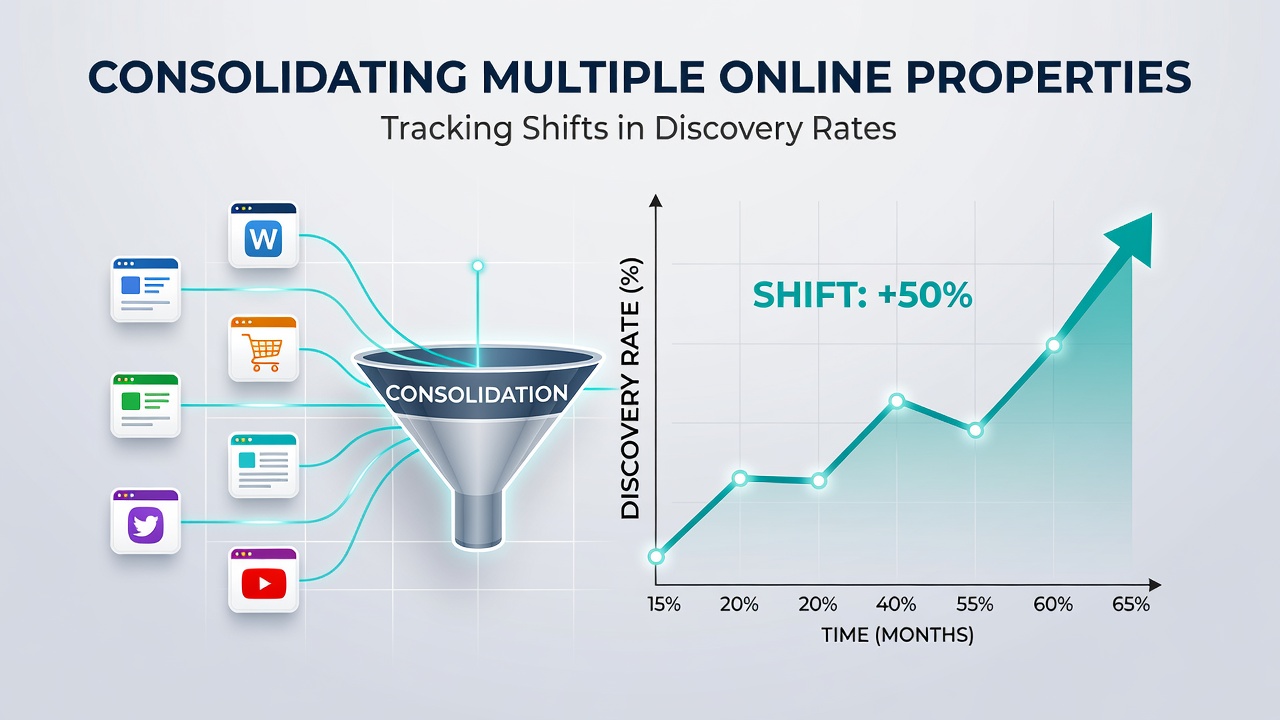
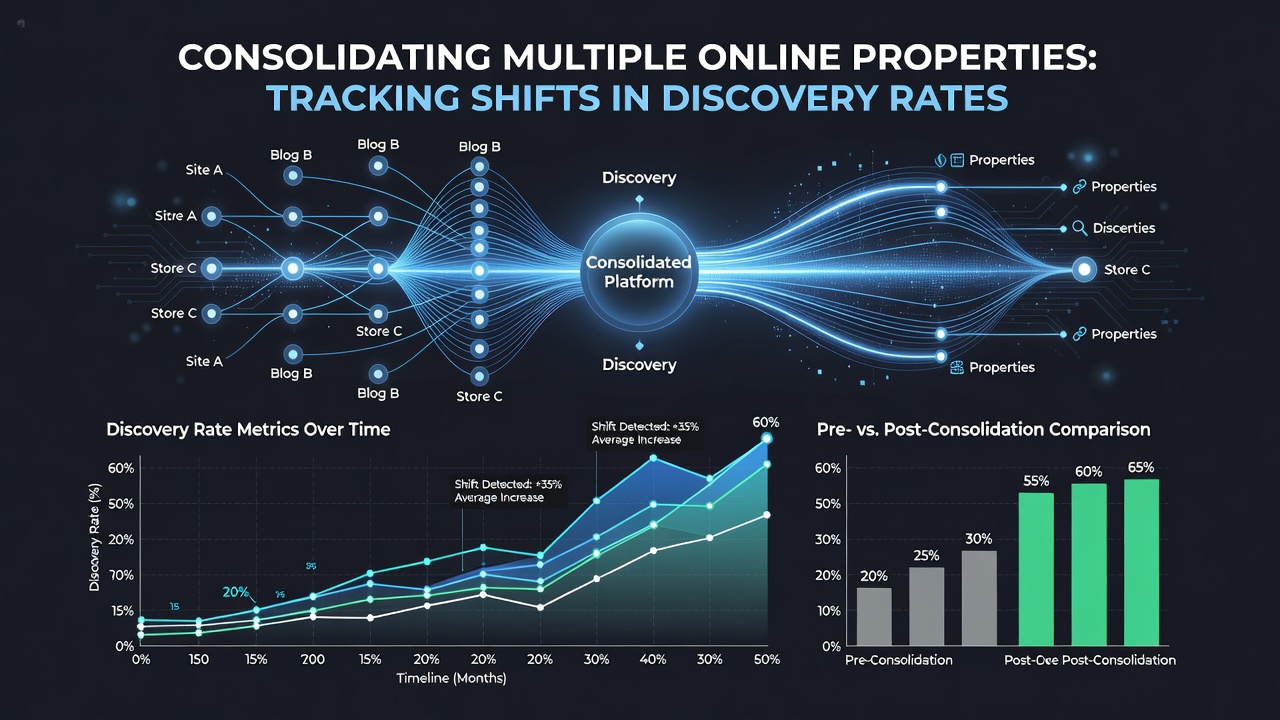
Organizations often merge separate websites, subdomains, and microsites into unified domains, and this process directly influences how search engines locate and index content over time. Data from web analytics platforms shows that consolidation alters crawl patterns because search engines reallocate resources when duplicate or fragmented properties disappear from their indexes. Observers note that discovery rates, measured through server log analysis and search console reports, frequently rise for consolidated pages while older standalone sites experience sharp drops in crawl frequency.
Core Mechanics Behind Property Consolidation
Teams combine multiple domains by implementing 301 redirects, updating internal link structures, and submitting updated sitemaps to major search engines, and these steps create new pathways for bots to follow. Research indicates that when content from several properties funnels into one primary domain, the consolidated site often receives higher priority in crawl queues because engines detect stronger topical authority and reduced duplication. Studies from academic institutions such as the University of Waterloo have documented that merged sites see measurable increases in page discovery within weeks of redirect implementation, particularly when XML sitemaps reflect the new architecture accurately.
Server logs reveal that bots adjust their visit intervals based on signals like response time, content freshness, and link equity concentration, and consolidation accelerates this adjustment because engines no longer split resources across multiple hostnames. Those who monitor these logs report that previously neglected subdomains receive more frequent visits once traffic and authority shift to the main property, while redundant pages drop out of regular crawl cycles entirely.
Measuring Discovery Rate Changes
Professionals track discovery shifts using a combination of Google Search Console data, Bing Webmaster Tools reports, and third-party crawl simulators that compare pre- and post-consolidation periods. Figures from industry reports show that average discovery rates can increase by 30 to 60 percent for priority pages within the first 90 days after migration, while secondary content may experience slower indexing until internal linking stabilizes. Analysts examine metrics such as "crawled pages per day" and "index coverage errors" to quantify these movements, and they cross-reference findings with log file entries that timestamp each bot visit.
Impact of Technical Signals on Crawl Behavior
Redirect chains, canonical tags, and hreflang annotations all influence how quickly engines discover consolidated content, and data shows that clean single-hop redirects produce faster indexing than multi-step sequences. When multiple properties point to the same canonical URLs, engines consolidate their crawl budget into fewer locations, which raises the frequency of visits to those URLs while lowering it for the abandoned domains. Observers tracking these patterns in September 2026 noted that sites implementing structured data markup alongside redirects experienced accelerated discovery compared with those relying on redirects alone.
Content updates posted after consolidation further affect discovery velocity because engines prioritize fresh material, and teams that publish new articles on the merged domain often see corresponding spikes in crawl activity within days. Log analysis from enterprise environments demonstrates that pages receiving both redirect equity and new internal links achieve higher discovery rates than pages that receive only one of these signals.
Regional Examples and Data Patterns
Reports compiled by the Australian Competition and Consumer Commission on digital market practices highlight how large retailers consolidated regional storefronts into single domains between 2024 and 2026, resulting in concentrated discovery across product categories that previously lived on separate country-code domains. Similar patterns appear in Canadian government digital service consolidations, where multiple agency microsites merged under canada.ca and experienced sustained increases in indexed page counts according to public transparency reports. These cases illustrate that discovery shifts follow predictable trajectories when technical migration steps receive consistent monitoring.
One documented migration involving a European media group showed that discovery rates for long-form articles rose steadily once all legacy domains redirected to a central property, while short news items required additional internal linking before engines resumed regular crawling. Such examples underscore the value of ongoing log review rather than one-time post-migration checks.
Conclusion
Consolidation of multiple online properties produces measurable changes in discovery rates that organizations can track through established tools and log analysis. Data consistently shows that careful redirect implementation, sitemap updates, and continued content signals drive the reallocation of crawl resources toward the primary domain. Those monitoring these transitions across different regions and industries continue to refine their measurement approaches as search engines adjust their own indexing algorithms in response to evolving web architectures.